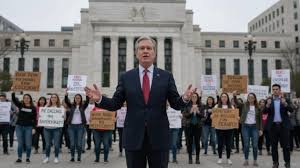
📅 Event Overview
Today marks a significant shift in U.S. monetary policy, as the Federal Reserve resumes its rate-cutting cycle after a year-long pause. The economic environment is notably different compared to the last rate cut in September 2024.
🔍 Comparison: September 2024 vs. Today
| Metric | September 2024 | September 2025 |
|---|---|---|
| Fed Rate Cut | 50 basis points | Expected: 25 basis points |
| CPI Trend | Declining (6 consecutive months) | Rising (last 3 releases) |
| Unemployment Rate | ↑ from 3.8% to 4.2% | ↑ 0.3% YTD |
| Economic Growth | Slowing | Q2 GDP: +3.3% (robust growth) |
Despite higher inflation and steady growth, the Fed appears ready to cut interest rates again.
❓ Why Cut Rates Now?
Economically, the rationale for cutting rates is not immediately clear:
- Inflation is rising, not falling.
- Unemployment has only modestly increased.
- GDP remains strong.
- Tariff impacts have yet to be fully reflected in the data.
Given these conditions, a case could be made for holding rates steady.
💬 Market Positioning
Markets are heavily aligned with expectations of a weaker U.S. dollar:
- EUR/USD options increasingly support a move toward €1.20.
- Gold has reached all-time highs on expectations of a renewed cutting cycle.
- Options pricing indicates:
- At least one more cut expected this year.
- A third cut is considered a 50/50 probability.
🏛️ Political Influence: Trump’s Role
There is growing belief that political pressure is influencing the Fed:
- President Donald Trump has repeatedly criticized the Fed.
- A recent example: FOMC member Lisa Cook was accused of mortgage fraud, followed by immediate calls for her resignation from the President.
- This environment may hinder the Fed’s ability to act independently.
Additionally, Chair Jerome Powell’s term ends in May 2026, and Fed members may be positioning themselves politically—favoring rate cuts to align with the President’s agenda.
📉 Impact on U.S. Treasuries and the Dollar
- Rate cut expectations are driving Treasury yields lower across the curve.
- 10-year Treasury yields, in particular, are a focus:
- Treasury Secretary Scott Bessent previously stated that reducing 10-year yields is a key objective.
- Lower yields help manage the growing U.S. fiscal deficit.
As a result:
- Lower yields = weaker Dollar outlook
- EUR/USD at €1.20 and GBP/USD nearing $1.40 by year-end 2025 appear increasingly likely.
⚠️ Risk Factor
If Powell signals fewer cuts than markets expect, there could be a temporary bullish reaction in the Dollar. However:
- This would likely be short-lived, given political pressure and Powell’s limited time remaining as Fed Chair.
✅ Summary
| Factor | Trend | Impact |
|---|---|---|
| Fed Policy | Renewed rate cuts | Dovish bias increases |
| Inflation | Rising | Cuts appear inconsistent |
| Unemployment | Slight increase | Not a major concern yet |
| GDP Growth | Strong | Adds to policy contradiction |
| Political Pressure | High from Trump administration | Compromises Fed independence |
| Treasury Yields | Declining | Supports weaker Dollar outlook |
| Market Pricing | EUR/USD and GBP/USD higher | Supports soft USD environment |