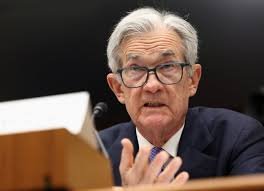
Dallas Federal Reserve President Lorie Logan warned on Thursday that policymakers should be very cautious about further interest rate cuts, noting that the recent cut was a strategic move to protect against a potentially sharper downturn in the labor market.
Speaking in remarks reported by Reuters, Logan emphasized that although the Fed acted preemptively, the broader economy still shows signs of resilience — and inflation pressures remain a concern.
Key Takeaways from Logan’s Remarks
- “We need to be very cautious about rate cuts.”
- The recent rate cut was “insurance against a more rapid, non-linear decline in the labor market.”
- Inflation is “running above target and trending higher.”
- Payroll growth has “declined markedly,” but the labor market remains “fairly balanced” and is “only gradually slowing.”
- Policy remains “modestly restrictive,” which Logan sees as appropriate given current conditions.
- The economy is “very close to maximum employment.”
- Demand remains strong, and more cooling in the labor market may still be appropriate.
- There are “risks on both sides of the Fed’s mandate” — balancing inflation control with employment support.
- Tariffs have contributed to recent inflation increases, particularly through goods prices.
- Logan noted that while the overall inflation impact from tariffs has been moderate, continued uncertainty around tariffs raises the risk to inflation expectations.
- She warned: “We must not ease too much, only to have to reverse course.”
Market Reaction: US Dollar Rebounds on Hawkish Tone
Logan’s comments were interpreted as hawkish by markets, receiving a score of 6.8 on FXStreet’s Fed Speech Tracker, indicating a clear bias against further immediate easing.
In response, the U.S. Dollar Index (DXY) extended its recovery, climbing 0.25% on the day to around 97.95, as investors recalibrated expectations for additional rate cuts in the near term.
What This Means for Monetary Policy
Logan’s tone adds to the growing internal debate within the Federal Reserve about the appropriate pace and scale of policy easing. While markets are largely pricing in another rate cut this month, her comments suggest that further moves are not guaranteed, especially if inflation remains sticky and the labor market avoids a sharp downturn.
Her emphasis on “guarding against the risk of rising inflation expectations” also reflects concerns that easing too quickly — especially in an environment of resilient demand — could backfire.
Quick Fed Facts:
🔹 What does the Fed do, and how does it affect the US Dollar?
The Fed sets interest rates to achieve its dual mandate: price stability and maximum employment. Higher rates typically strengthen the USD by attracting foreign capital, while lower rates often weaken it.
🔹 How often does the Fed meet?
The Federal Open Market Committee (FOMC) holds eight scheduled meetings per year to review economic conditions and set monetary policy.
🔹 What is QE and QT?
- Quantitative Easing (QE): The Fed buys bonds to inject liquidity during downturns — usually weakens the USD.
- Quantitative Tightening (QT): The Fed reduces its balance sheet by allowing bonds to mature without reinvestment — generally strengthens the USD.
Bottom Line
Logan’s message is clear: while the Fed has room to act if the labor market deteriorates further, it must avoid moving too quickly on rate cuts, especially with inflation still above target and tariff-related risks on the horizon. Her comments add a hawkish undertone to the Fed’s otherwise cautious approach, helping support the U.S. Dollar’s recovery in Thursday trading.