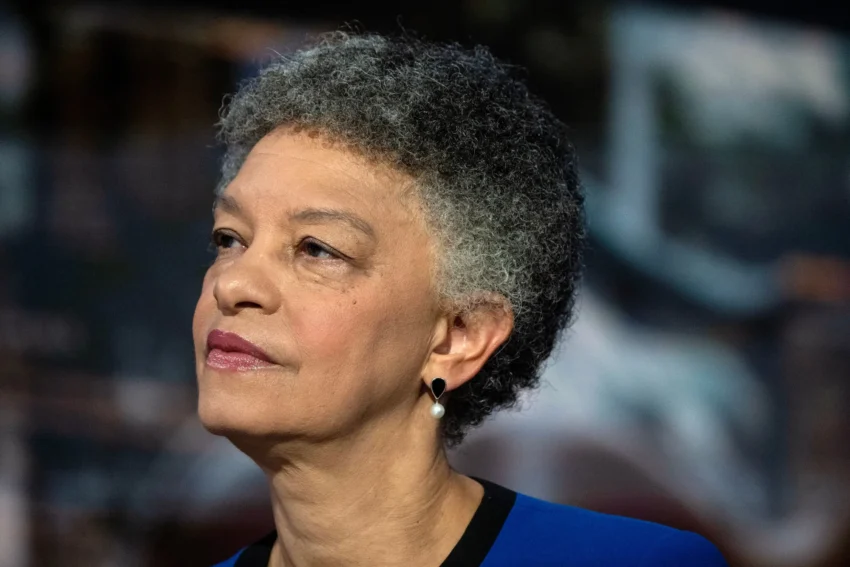
Boston Federal Reserve President Susan Collins said on Tuesday that the current monetary policy is “modestly restrictive” and appropriate, given ongoing inflation concerns.
Key Statements:
- Rate Cuts Possible: Collins said it might be appropriate to cut interest rates again if future economic data supports more policy easing.
- Supported Recent Cut: She backed the Fed’s recent rate cut, citing risks to both inflation and employment mandates.
- Inflation Risks Declining: While inflation is still a concern, Collins noted that upward risks to price increases have lessened.
- Outlook Uncertain: She warned that worse outcomes for inflation or the job market cannot be ruled out.
- Baseline Outlook Positive: Her central forecast remains relatively stable and positive.
- Labor Market Adjustment: Collins expects job hiring to rebound once businesses adjust to the effects of tariffs.
- Inflation Forecast: Inflation is expected to remain high into next year but should decline afterward.
- Labor Risk: She mentioned a risk that weaker labor demand could raise unemployment levels.
- Resilient Growth: Despite a softer labor market, economic growth has remained strong.
Market Reaction:
- The FXStreet Fed Speech Tracker gave Collins’ comments a neutral score of 5.4.
- The US Dollar Index (DXY) was slightly lower, last seen at 97.85.
Fed Policy Background:
What does the Fed do?
The Federal Reserve (Fed) manages U.S. monetary policy to promote stable prices and full employment. Its main tool is adjusting interest rates. Higher rates control inflation and strengthen the US Dollar by attracting foreign investment. Lower rates encourage borrowing and spending, which can weaken the Dollar.
How often does the Fed meet?
The Federal Open Market Committee (FOMC) meets eight times a year to review economic data and set policy. The FOMC includes 12 voting members, including the Fed Chair, the President of the New York Fed, and four regional Fed bank presidents on a rotating basis.
What is Quantitative Easing (QE)?
QE is a non-standard Fed policy used in crises, like the 2008 financial crisis. The Fed prints money to buy bonds, increasing money supply and lowering long-term interest rates. QE often weakens the Dollar.
What is Quantitative Tightening (QT)?
QT is the opposite of QE. The Fed stops buying bonds and lets existing bonds mature without reinvesting. This reduces liquidity and typically strengthens the Dollar.