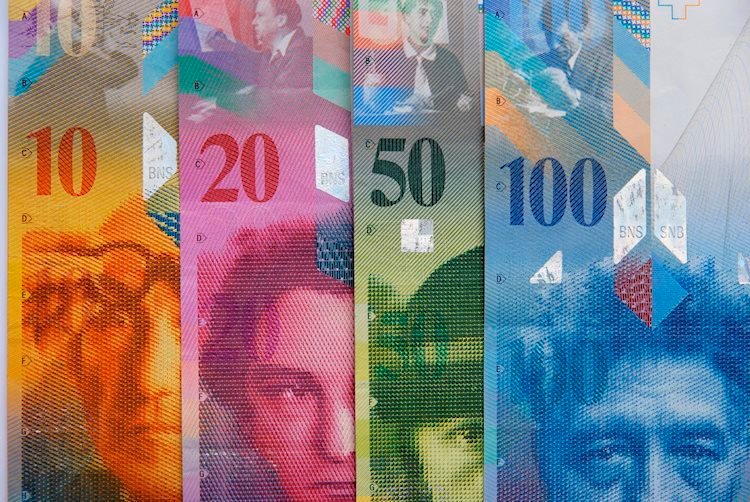
The US Dollar eased from session highs near 0.7980 against the Swiss Franc but remains firmly on its bullish path. The Swiss National Bank’s (SNB) latest minutes have calmed concerns over deflation and ruled out the possibility of negative interest rates for now.
SNB Minutes Signal Confidence in Swiss Economy Despite Trade Risks
The Swiss National Bank kept its key interest rate steady at 0% during its last policy meeting. The minutes revealed that the SNB does not expect deflationary pressures to persist, easing market speculation about further monetary easing.
While the SNB acknowledged challenges such as rising US tariffs and global demand fluctuations, it described the Swiss economy as resilient, with most indicators pointing toward moderate growth. This outlook has provided some support to the Swiss Franc, which saw a mild boost following the minutes’ release.
Market Context
Before the minutes, the US Dollar had gradually strengthened, benefiting from a cautious risk environment amid renewed US-China trade tensions. The news of the US considering new restrictions on software exports to China added to the cautious mood.
About the Swiss National Bank (SNB)
The SNB is Switzerland’s central bank, tasked with maintaining price stability over the medium to long term. This goal translates to keeping annual inflation below 2%, measured by the Swiss Consumer Price Index (CPI). The SNB influences the economy mainly through interest rate adjustments and exchange rate policies.
SNB Interest Rate Policy and Its Impact on CHF
The SNB adjusts its policy rate to keep inflation in check. When inflation rises above target, higher rates help cool price growth, which typically strengthens the Swiss Franc by attracting investors. Conversely, lower rates tend to weaken the currency.
SNB’s Role in Forex Market Intervention
The SNB actively intervenes in currency markets to prevent excessive appreciation of the Swiss Franc, which could harm the country’s export-driven economy. From 2011 to 2015, the SNB even pegged the Franc to the Euro to limit its strength. Typically, interventions involve purchasing foreign currencies like the US Dollar or Euro using the SNB’s large forex reserves. However, during periods of high inflation, especially driven by energy prices, the SNB may refrain from intervening, as a strong Franc helps lower import costs.
Monetary Policy Meetings
The SNB Governing Council meets quarterly—in March, June, September, and December—to review and decide on monetary policy, accompanied by updated inflation forecasts.